
Bánh Giò (Vietnamese Pork Pyramid Dumplings)
Try your hand at Bánh Giò - a Northern Vietnamese gem! Learn how to make the soft and delicately chewy steamed dough from scratch, then follow our steps to master the wrapping technique for that signature pyramid look. Complete the experience by serving each fresh dumpling with a classic dipping sauce.
If you love these, try Aunty’s Vietnamese pork and shrimp dumplings!

A family work of art
There’s something tremendously satisfying about peeling back the outer layers of Bánh Giò to reveal its magnificent pyramid structure. You would think that something so glorious would just be all for show, but that’s certainly not true!
Each dumpling is hand wrapped and stuffed with care, so they become edible gifts that are easy to pack and deliver.
The real fun begins when your spoon cuts into the steamed dough. It’s firm yet soft and slightly sticky, a terrific balance for the juicy ground pork seared with aromatics.
These pyramid dumplings may seem simple, but adding chopped woodear mushrooms elevates the dish with a springy crunch.
Wrapping Bánh Giò into pyramids might seem like a huge job in itself, but with the help of a few hands (get your kids if you them nearby!) you can start a production line. For us, Grandma wiped the banana leaves while I stuffed!
What do I use to wrap the dumplings?

Bánh Giò is typically wrapped using banana leaves. Banana leaves can be found in Asian grocery stores in the freezer section. Since the full-sized leaf is huge, the ones sold in shops will generally be cut up into squares or rectangles.
They just need a quick blanch and wipe before you can use them. Banana leaves are great for lining a steamer because they stop ingredients from sticking (we use it for that reason when we make Chao Tom (Sugar Cane Shrimp) and for adding natural flavor [perfect to infuse with Xôi Mặn (Vietnamese Sticky Rice)].
For our Bánh Giò recipe, though, they’re a terrific way to keep the pyramid dumplings in tact for their signature look and taste!

Why this recipe works
- Mixing all the flours and starches together BEFORE stirring in the liquid ensures that it comes together as a paste rather than in clumps.
- Seasoning the dough and cooking it with a stock gives Bánh Giò extra flavor.
- Woodear and shiitake mushrooms, quail eggs and ground pork make a fantastic texture combination that balances the soft dough.
What you’ll need
For the dough

About the ingredients
Our Bánh Giò recipe uses chicken and pork stock, but you can substitute it for water and 1 tsp chicken bouillon powder if you don’t have any readily available to you.
For the arrowroot starch, it can be substituted for tapioca flour in equal amounts.
For the filling

About the ingredients
For the filling, the main ingredients are the woodear mushrooms and ground pork. The quail eggs and shiitake mushrooms are optional, but a great addition if you have them on hand.
How to make this recipe
Making the dough and filling
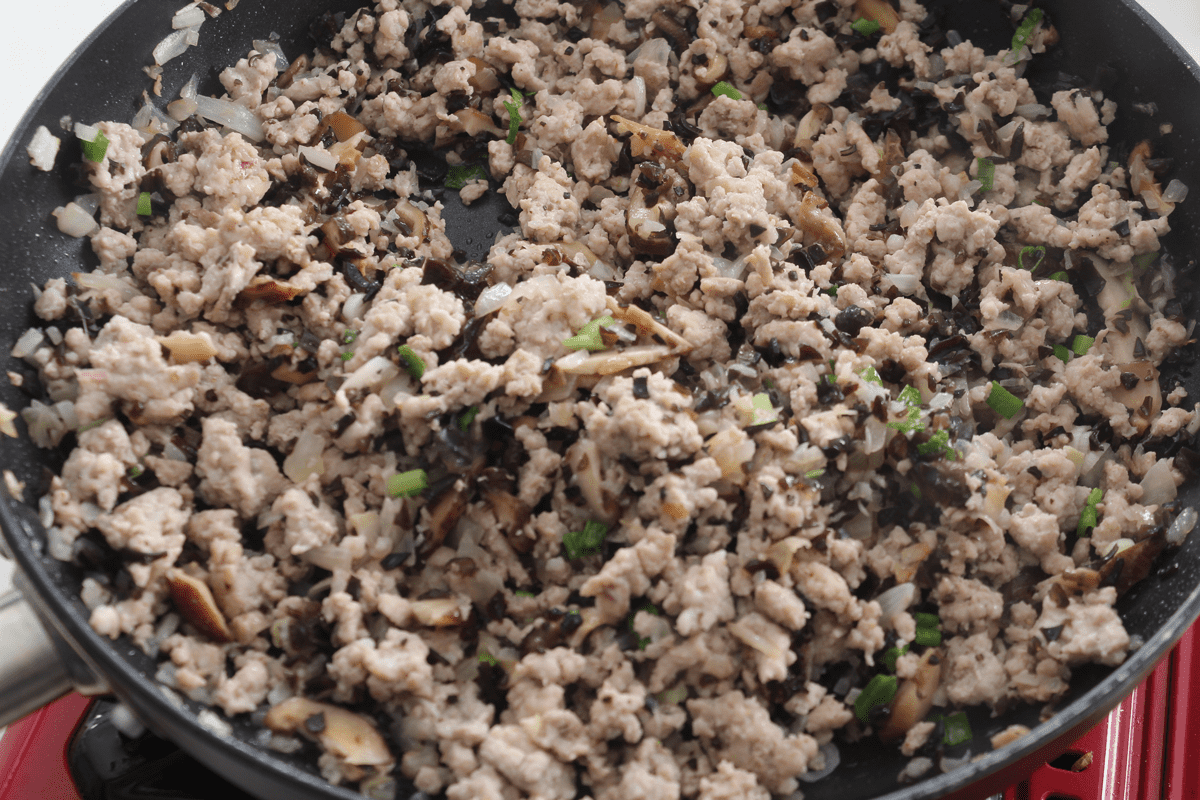
Heat up a wok or pan on high heat, then pour in 2 tbsp oil. When hot, turn the heat to medium and throw in the chopped onion and red shallots. Stir for 30 seconds or until fragrant, then turn the heat to high and add in the ground pork.
Break the pork up and stir. Mix in the sugar, salt, chicken bouillon powder, pepper and fish sauce, then cook for 3 minutes or until 80% cooked.
Add the woodear and shiitake mushrooms and scallions/spring onions in, then stir for another 2 minutes. Turn off the heat and let it cool as you work on the dough.

Stir together the tapioca, potato and arrowroot starches with the rice flour, salt, pepper and chicken bouillon powder in a large mixing bowl.
Note: You can also mix them together in a large pot as you will be cooking it in there.

Pour the stock over the flour mixtures, stir until it has become liquid and add the oil in. Make sure that by the end, there is no resistance from the starch as you mix.
Transfer the mixture into a large deep pan or wok and turn the heat up to medium-high. Stir using chopsticks until it starts to produce strands when you lift up the chopsticks, then increase the stirring speed until the liquid forms a sticky dough.
This will take about 10 minutes. When it has formed a paste, let it rest as you prepare the banana leaves.
How to wrap the dumpling

Bring a pan of water to a boil, then gently dip the each separate leaf into the hot water. Use tongs to take it out, then wipe both sides dry. Repeat for every banana leaf until you have a stack of leaves ready for the wrapping.

Take one leaf and rub a thin layer of oil on both sides, then rotate it to make a diamond. Make sure the side with no lined ridges is facing up.
Fold the bottom part up until it makes a triangle. If there’s a section left with no overlap, that’s okay.
Pro Tip: If you have thick banana leaves, then using one layer will work. But if they’re on the thinner side, I like to use two by laying them on top of each other to make the wrapping thicker and more secure.

Fold the triangle in half again to make a smaller triangle.

Open the triangle up and hold the point securely in your hand. Make sure that there is no hole at the bottom for any filling to leak out. The opening should form an enclosed circle to keep everything inside.
Pro Tip: Lightly oil the opening so the dough doesn’t stick.
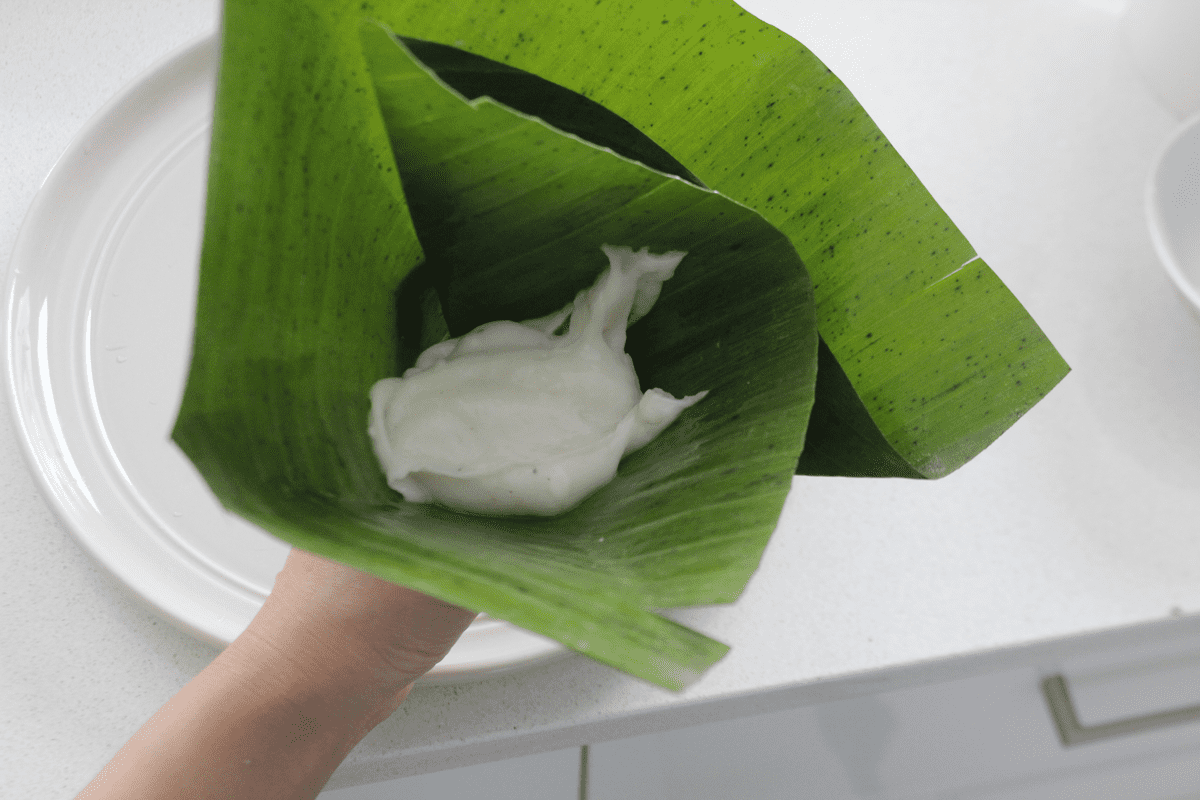
Dip a metal spoon in oil, then scoop 1-2 tbsp dough and pour it into the banana leaf. Use the back of the spoon to spread the filling out and push it into the point.
Note: The amount you scoop will depend on the size of your leaf. Some will fit more, some less.

Push a quail egg into the center.
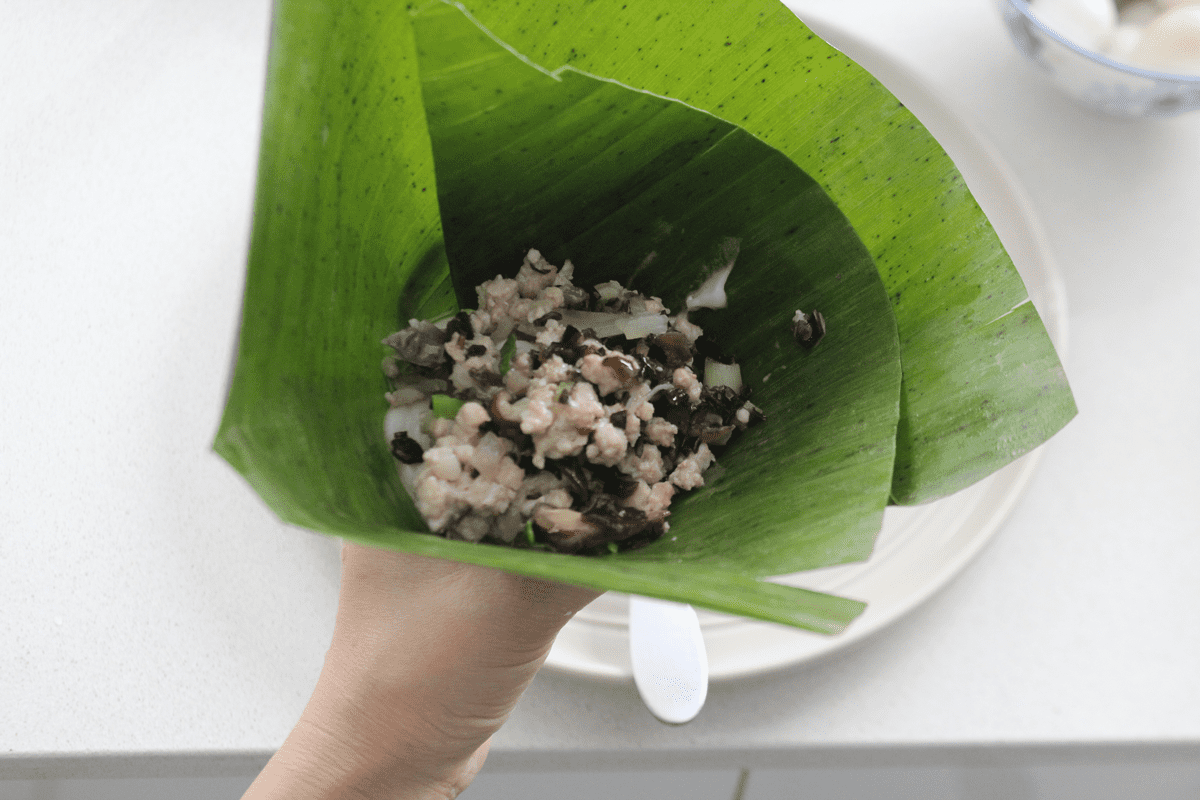
Scoop 1-2 tbsp of the ground pork filling onto the dough.

Dip the spoon into oil again, then scoop 1-2 tbsp of the dough on top. Spread it around to cover all the mince.

Fold the bottom corner up to seal the dough. This will also form the base for the Bánh Giò.

Fold the left part of the leaf in. Make sure it’s tight against the filling.

Bring the right flap in and fold it to seal the base.

Get the loose flap at the top and tuck it into the opening just behind it.

Repeat the pyramid folding and filling steps until each Bánh Giò is complete.

Set up a steamer and put them all in to steam for 20 minutes or until cooked.
Let the Bánh Giò cool, then enjoy as is with a homemade Vietnamese Dipping Sauce (Nước Mắm)!
Recipe FAQs
Tips for the best results
- Avoid overstuffing. This will make it harder for the banana leaf to wrap around the filling, which could leave holes and allow the batter to ooze out as it steams.
- Use plastic wrap. Wrap the Bánh Giò with plastic wrap so they stay secure in their shape while steaming.
- Coat the banana leaf in oil. Be generous when you cover the leaves in oil before the filling goes in so it comes apart smoothly when it’s time to eat.
- Break the ground pork up finely. The smaller the pieces, the more surface area to absorb more flavor.

Our favorite dishes to take on the go!
Bánh Giò is so compact that it’s a fantastic meal to bring on picnics or pack for work. Here are our some more meals you can easily take with you:
- Bánh Bao (Steamed Pork Buns) - Make them ahead and freeze for later or enjoy each one fresh as is. They’re great in school lunch boxes or as an afternoon snack.
- Chả Giò (Spring Rolls) - These are perfect for a crispy, crunchy bite that will guarantee to satisfy everyone. Try it in a vegetarian version as well!
- Gỏi Cuốn (Rice Paper Rolls) - Pair each roll with a classic Hoisin Peanut Sauce (Tương Chấm Gỏi Cuốn) and you’ll have an unbeatable pair that’s fresh and healthy.
- Seafood Rolls - Succulent on the inside and a fantastic finger food, take these rolls out to make your meal the envy of everyone!
Want more home cooked recipes?
Subscribe to our email list and be the first to get recipe updates as soon as they’re posted. You can also follow Wok & Kin on Instagram, Pinterest, Facebook and Twitter!
Join the family!
Link nội dung: https://aicschool.edu.vn/banh-gio-calories-a81914.html